A winter skincare routine that actually works does not start with buying more products. It starts with understanding what cold air does to your skin, then making a few calm, consistent changes. When the temperature drops, the air holds less moisture, indoor heating dries it out further, and the skin barrier that normally keeps water in starts to struggle. The result is familiar to most of us by January: tight cheeks, flaky patches around the nose and mouth, dullness, and makeup that sits on the skin instead of blending in.
This winter skincare routine 2026 guide keeps things simple: twelve steps, morning and evening, with a couple of weekly extras. Every product type mentioned is easy to find at a drugstore or beauty counter. Think of it as a reset for the cold months, not a reinvention of everything you already do.

Why Your Winter Skincare Routine Needs a Rethink
Summer skin and winter skin are not the same. In summer, humidity helps your moisturizer along and a light lotion is often enough. In winter, that same lotion can leave you tight by lunchtime, because dry air pulls water out faster than a thin formula can replace it. The fix is layering: thin, watery hydration first, then a cream that seals it in.
There is another winter trap: over-correcting. When skin feels dry, the instinct is to scrub it or pile on strong actives to force a glow. Irritated winter skin usually needs the opposite — gentler cleansing and a barrier-first mindset. If products that used to feel fine now sting, pull back, simplify, and let the barrier recover. For a focused reset, our skin barrier repair fall guide walks through a simple four-product routine for dry, damaged skin.
Winter Skincare Routine 2026: The Morning Steps
Step 1: Cleanse gently, with lukewarm water
Start with a gentle, creamy or milky cleanser rather than a foaming wash that leaves skin squeaky. Squeaky is not clean — it is stripped. Use lukewarm water, never hot, because hot water dissolves the natural oils that protect your skin and worsens winter itch. If your skin is very dry in the morning, a lukewarm rinse followed by your hydrating steps is fine.
Step 2: Apply hydrating layers to damp skin
This step changes everything in winter. While skin is still slightly damp, press in a hydrating toner or essence. Damp skin absorbs water-based layers far better than dry skin, and that first layer of water is what the rest of your routine locks in. Two thin layers beat one heavy one for comfort.
Step 3: Add a hyaluronic acid serum
A hyaluronic acid serum draws water into the skin and gives the plump, comfortable feeling dry skin loses by midday. Apply it over your damp toner layer, before any cream. One pea-sized amount over face and neck is enough — if it pills under moisturizer, you are using too much.
Step 4: Seal it with a ceramide moisturizer
Now comes the seal. A ceramide-rich cream helps rebuild the skin barrier and stops the water you just added from escaping. Creams outperform light lotions in winter for most skin types; oily skin can use a gel-cream with ceramides, with a thinner layer on the T-zone and richer cream on cheeks. Apply within a few minutes of washing.
Step 5: Never skip SPF, even in winter
Winter sun is easy to underestimate. UV rays pass through clouds, and snow reflects them back at your face, so exposure adds up quietly over the season. A broad-spectrum SPF 30 as the last morning step protects the progress your routine is making, and a dedicated sunscreen is more reliable than relying on SPF in moisturizer.
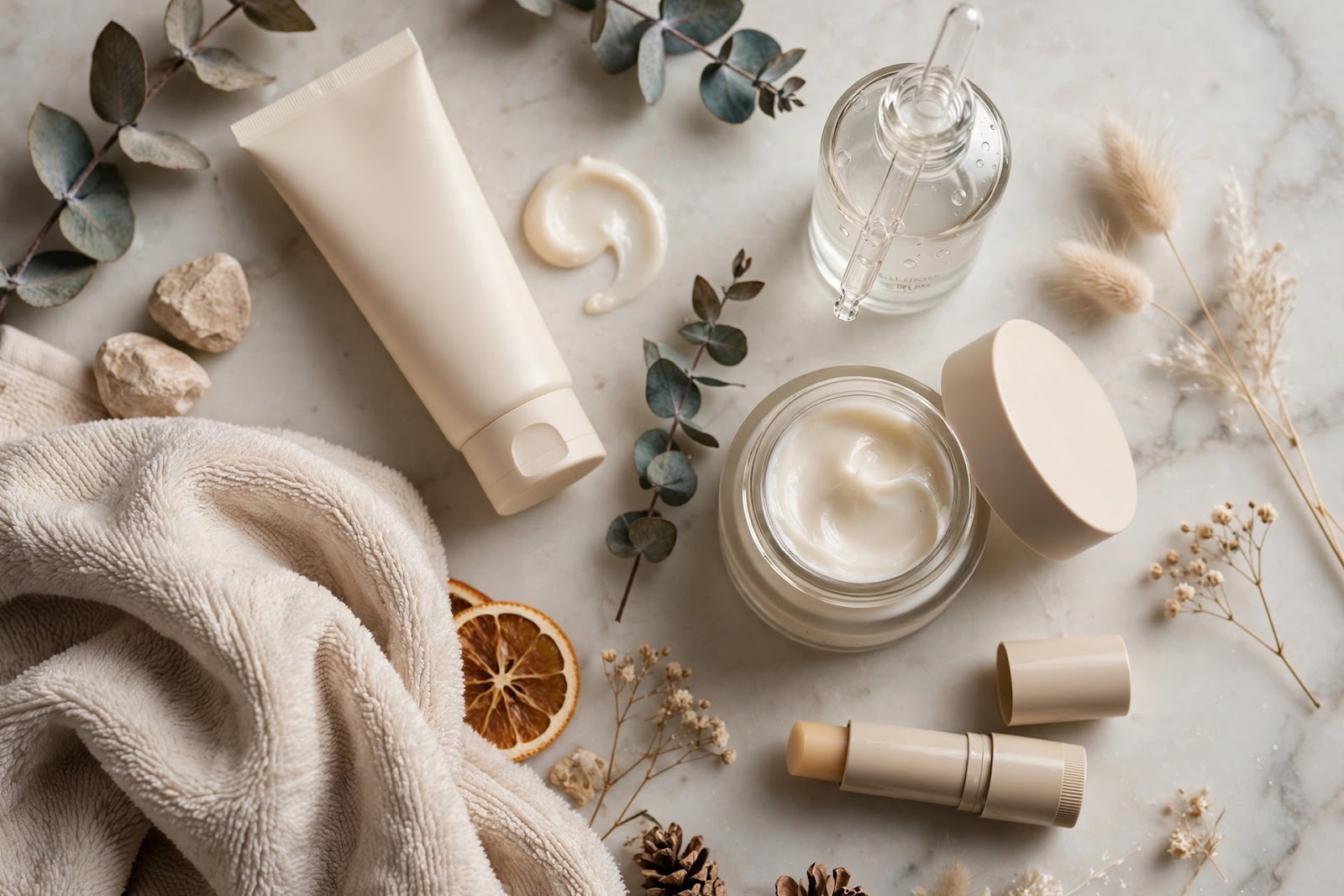
Winter Skincare Routine 2026: The Evening Steps
Step 6: Remove the day gently
Evening cleansing should take the day off without taking your barrier with it. If you wear makeup or sunscreen, a gentle cleansing balm first, followed by your creamy cleanser, is kinder than scrubbing with one harsh wash. Rinse lukewarm, pat dry, and leave skin slightly damp.
Step 7: Use treatments sparingly, not nightly
Winter is not the season to push strong actives every night. If you use niacinamide or a gentle retinol, keep it to two or three evenings a week and buffer it: hydrating layer first, then treatment, then night cream. If skin is already irritated, pause treatments for a week and focus on barrier repair — our guide to skin barrier repair covers that recovery.
Step 8: Switch to a richer night cream
Night is when skin does its repair work, so give it something substantial. A richer night cream, or your ceramide cream layered more generously, supports overnight recovery. On the driest nights, a thin layer of plain occlusive balm over cream on cheeks and around the mouth stops morning tightness.
Step 9: Do not forget lips, hands, and neck
Lips crack first because they have no oil glands of their own, so a plain, fragrance-free lip balm morning and night — and before going out into cold wind — prevents painful splitting. Hands need the same attention after every wash, and your neck deserves whatever your face gets.
Three Weekly Extras That Complete the Routine
Step 10: Exfoliate gently, once a week
Flaky winter skin tempts you to scrub, but harsh scrubs irritate and make flaking worse within days. A gentle chemical exfoliant once a week lifts dead skin without damaging the barrier. Skip it entirely if skin feels sensitive or wind-burned — exfoliation is a bonus, not a duty.
Step 11: Add a hydrating mask once a week
A hydrating sheet mask or creamy wash-off mask once a week is winter's easiest reset. Use it after cleansing, then follow with night cream to seal hydration in. It is also the perfect pre-party step: hydrated skin is why frosted holiday makeup looks luminous on some people and patchy on others.
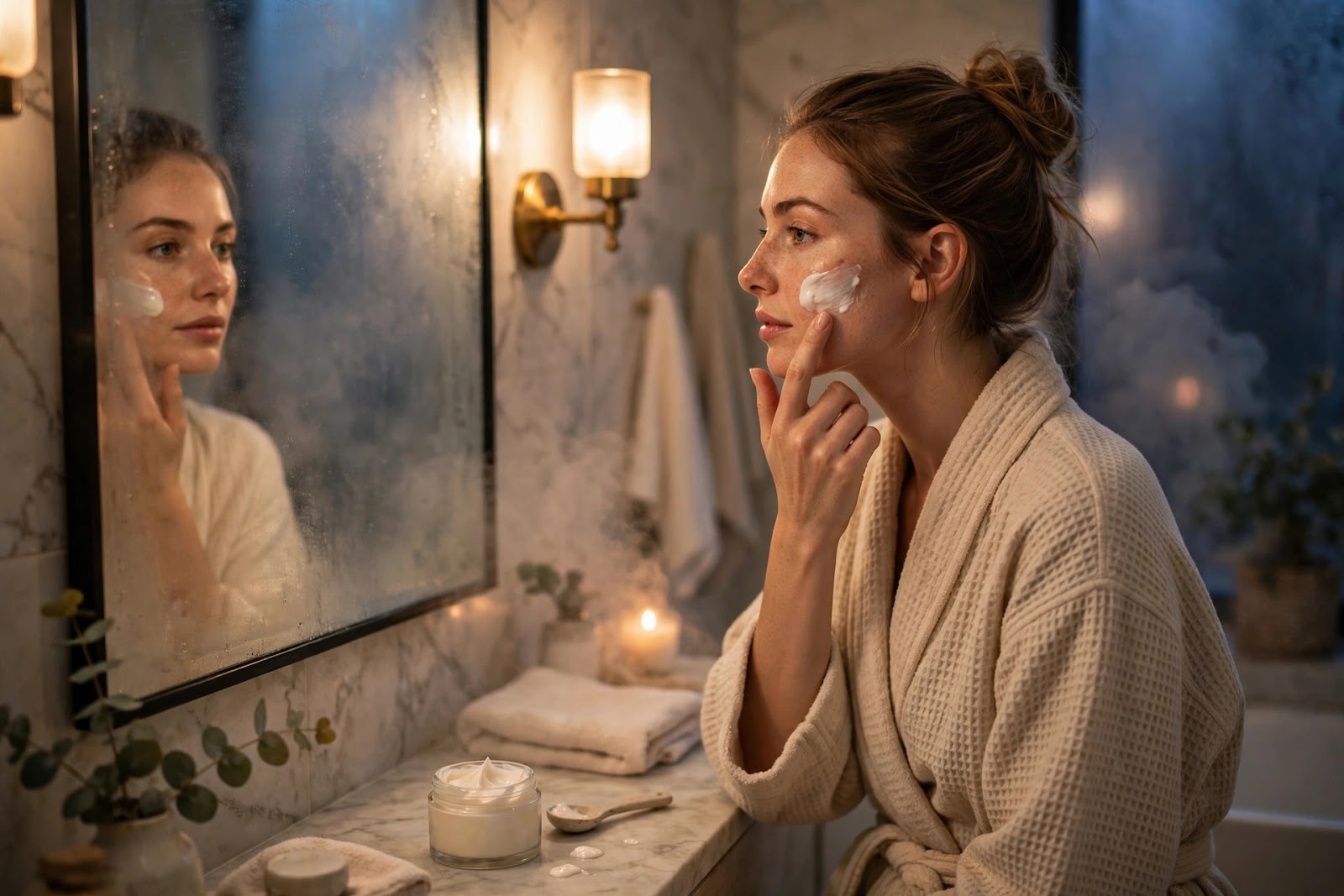
Step 12: Fix the air around you
The final step is not a product at all. A humidifier in the bedroom puts moisture back into air that heating removes, and many people notice softer morning skin within a week. Shorter, lukewarm showers help too. Your skin lives in your home's air most of the day, so changing that air is a legitimate skincare step.
Winter Skincare Routine Mistakes to Avoid
A few mistakes undo a good routine: skipping SPF because it is cloudy, using the foaming cleanser that worked in July, exfoliating daily to chase flakes, and layering five new products at once. Introduce one new product at a time and give it a week before adding the next.
Skin type still matters. Dry skin can use the full routine as written; combination skin can keep lighter layers on the T-zone and richer cream only on cheeks. Oily skin that feels tight is usually dehydrated, not dry — focus on watery layers and a gel-cream seal rather than skipping moisturizer. Sensitive skin should patch-test each new step on the jawline first.
Winter Skincare Routine 2026: Your Questions, Answered
Should I change my whole routine for winter?
No — change textures and add layers, not everything at once. Keep the products you trust, swap a light lotion for a ceramide cream, add a hydrating layer on damp skin, and keep SPF.
Why does my skin feel tight even after moisturizing?
Usually the water step is missing. Cream over fully dry skin seals in little moisture. Apply toner and serum while skin is still damp, then cream within a few minutes, and the tight-by-lunchtime feeling often fades within days.
Can I still wear makeup in winter?
Absolutely — hydrated skin wears makeup better. Do your morning routine, let it settle for a few minutes, then apply makeup. Cream and liquid formulas look fresher than heavy powders on winter skin. For party season, pair this routine with warm Thanksgiving makeup looks or a Christmas hairstyle.
When should I see a dermatologist about winter skin?
If skin cracks, bleeds, or stays red and itchy despite a gentle barrier-focused routine for a couple of weeks, seek professional advice rather than another product experiment. This guide is general information, not medical advice.
The Bottom Line
A good winter skincare routine 2026 is less about the number of products and more about the order they go on: gentle cleanse, water on damp skin, serum, ceramide seal, SPF in the morning, and a richer repair layer at night. Add a weekly mask and a humidifier, and you have covered the cold season. Start with the damp-skin step this week — it is the smallest change here and the one most people feel first.
Once skin is comfortable again, every seasonal look gets easier, from a winter capsule wardrobe to a fall capsule wardrobe under a long coat.
Comments
Post a Comment